
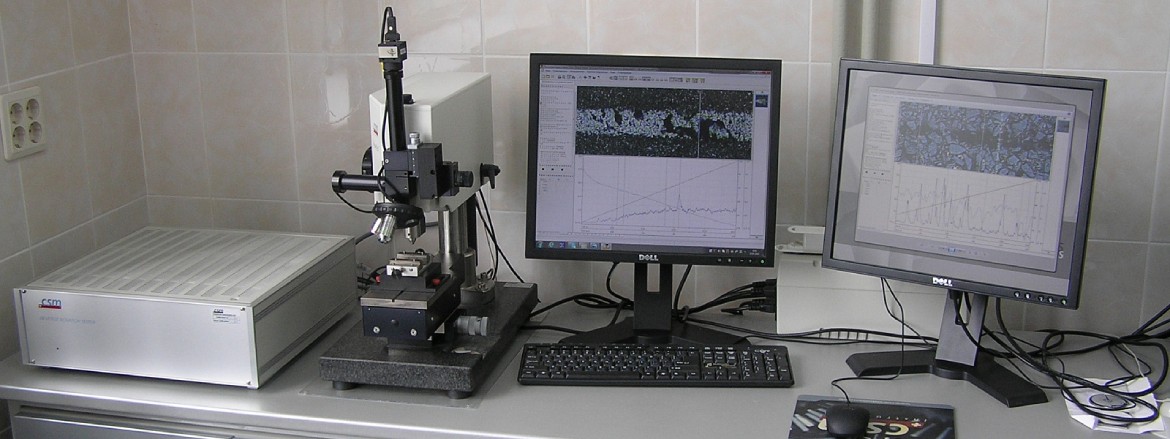
By examining and quantifying a material’s micro-structure, its performance can be better understood. Thus, metallography is used in almost all stages during the lifetime of a component: from the initial materials development to inspection, production, manufacturing process control, and even failure analysis if needed. The principles of metallography help to ensure product reliability including:
Standard methods followed :
- Bureau of Indian Standards (BIS)
- American Society for Testing and Materials (ASTM)
- American Society for Mechanical Engineers (ASME)
- Indian Standards (IS)
- International Organization for Standardization (ISO)
- ASME Handbook Volume 9
We can perform a wide array of examinations, these include –
- Case depth measurement
- Microstructure & Macrostructure Analysis (with photographic evidence)
- Phase determination and discontinuity identification
- Grain size determinations
- Inclusion ratings & graphite evaluation
- A detailed engineering report will identify the material’s microstructure accompanied with high-resolution digital photographs.
Metallography test for ferrous, non-ferrous and other alloys
- Micro Structures of Metal with Image
- Inclusion, Macro, Case Depth, Grain Size, Decarb, Nodularity, Spheronization, etc.
- Coating Thickness by Microscopic Method
- Ferrite by Metallography and by ferritoscope
- Macro Examination of Welded Joints and Brazed Joints etc.